

Estimated reading time at 200 wpm: 11 minutes
The historical record demonstrates a consistent pattern in human development: disruption is immediate, while adaptation is glacial. This phenomenon, termed the “Readiness Gap“, describes the perilous interval between the acquisition of a transformative power (technological, economic, or biological) and the development of the social, ethical, and legal frameworks necessary to contain it. In every instance detailed below, humanity seized the advantage of the new power immediately, leaving the adverse consequences to be managed by subsequent generations who had not consented to the risk.
Whether or not you agree our Fat Disclaimer applies
This article explores some waypoints in human history and extracts some common themes.
1. The Neolithic Revolution (c. 10,000 BCE)
The Disruption: The transition from hunter-gatherer existence to sedentary agriculture.
- The Power: The ability to domesticate plants and animals allowed humans to artificially generate a surplus of energy (grain) that could be stored for the future. This broke the “hand-to-mouth” energy constraint that had defined the species for 200,000 years.
- Why It Went Wrong: The failure was biological and social. We adopted high-density living arrangements before we had any concept of sanitation or immunology. By living in close quarters with domesticated animals, humans inadvertently created a laboratory for zoonotic transfer, birthing diseases like smallpox, measles, and influenza.
- Furthermore, the social software was unprepared for surplus. In foraging societies, hoarding is impossible; in farming societies, it is essential. This new economic reality outpaced our social egalitarianism, instantly creating rigid class hierarchies, slavery (as labour was needed for crops), and organised warfare (to steal stored grain). We built cities before we invented the ethics of living in them.
2. The Information Revolution (c. 1440)
The Disruption: The invention of the movable type printing press by Johannes Gutenberg.
- The Power: The democratisation of information. The cost of reproducing knowledge dropped to near zero, ending the monopoly of the Church and State on “truth”.
- Why It Went Wrong: European society was legally and culturally structured around a single, central authority for truth. When the press released a flood of competing ideas (Protestantism, scientific inquiry, political dissent), the population lacked the “critical literacy” to distinguish fact from propaganda.
- Without institutions to mediate this conflict or verify facts, the “abundance of truth” did not lead to immediate enlightenment but to polarisation. The result was the Thirty Years’ War (1618–1648), where competing pamphlets fuelled a conflict that killed millions. We invented the accelerator for information centuries before we invented the brakes (journalistic standards, peer review, conflict mediation).
3. The Industrial Revolution (c. 1760 – 1840)
The Disruption: The shift from muscle/animal power to chemical power (coal and later oil).
- The Power: The ability to release millions of years of stored solar energy (fossil fuels) to drive machinery, effectively decoupling production from human physical limits.
- Why It Went Wrong: The failure here was a conceptual error in accounting. Civilisation was built on the false assumption that the planetary atmosphere was an infinite sink for waste. Economic models were designed to account for the cost of extraction and labour, but treated ecological damage as an “externality”—a cost of zero.
- Because the feedback loop of the carbon cycle is slow (decades to centuries), the immediate benefits of industrialisation masked the accumulating debt. By the time the bill came due (climate change), the entire global infrastructure was already locked into a suicide pact with carbon. We scaled the engine before we built the exhaust filter.
4. The Chemical Revolution: Dynamite & Haber-Bosch
The Disruption: Two distinct breakthroughs in manipulating matter—Alfred Nobel’s high explosives (1867) and Fritz Haber’s nitrogen fixation (1909).
A. Dynamite
- The Power: Safe, stable, transportable high explosives.
- Why It Went Wrong: Alfred Nobel suffered from a “deterrence delusion”. He naively believed that the sheer, terrifying destructive power of dynamite would make war “impossible” because no nation would risk it. He fundamentally misunderstood the military’s capacity to rationalise mass casualty. Instead of ending war, dynamite industrialised it, turning the battlefield from a contest of manoeuvre into a meat grinder of attrition.
B. The Haber-Bosch Process
- The Power: Synthesising ammonia from nitrogen in the air, creating infinite fertiliser.
- Why It Went Wrong: This was a failure to recognise Dual-Use Technology. The same chemical process used to feed the world was immediately repurposed to create synthetic explosives, prolonging WWI by years. Furthermore, we mastered the chemistry of growth without understanding the biology of systems; the resulting nitrogen runoff is now collapsing aquatic ecosystems (dead zones). We treated the planet as a factory floor rather than a living organism.
5. The Kinetic Revolution: Aviation & Space (1903 – 1957)
The Disruption: The conquest of flight and the escape from Earth’s gravity.
- The Power: Three-dimensional movement and orbital capability.
- Why It Went Wrong: The dream of flight was driven by the romance of exploration, but the physics of flight is identical to the physics of delivery. There was no legal or ethical framework for “aerial sovereignty”.
- The “Readiness Gap” here is stark: within 11 years of the first flight, planes were directing artillery; shortly after, they were bombing civilians. The Space Race repeated this error. The technology to put a human on the moon (Saturn V) is functionally indistinguishable from the technology to drop a nuclear warhead on a city (ICBM). We developed the reach of gods while retaining the tribal animosities of primates.
6. The Nuclear Age (1945)
The Disruption: The splitting of the atom.
- The Power: Access to the binding energy of the universe.
- Why It Went Wrong: This is the ultimate example of the “Political Lag”. The physics of 1945 collided with the geopolitics of the 19th century. Humanity possessed the power of a star while still organised into competitive nation-states focused on territorial acquisition.
- Because the weapon was used (Hiroshima/Nagasaki) before any treaty or control structure existed, the world was forced into a reactive posture. Survival shifted from “defence” to “Mutually Assured Destruction” (MAD)—a doctrine that relies on the rational behaviour of irrational actors. We have survived not by design, but by luck.
7. The Economic Revolution: Fiat Currency (1971)
The Disruption: The “Nixon Shock”—severing the convertibility of the US Dollar to gold.
- The Power: The ability to create infinite liquidity and detach the economy from physical constraints (scarcity).
- Why It Went Wrong: This severed the connection between “value” and “reality”. Governments were granted the power to manipulate value without the discipline of a physical anchor. Without a “failsafe” or strict ethical charter, this power was used to solve short-term political problems (debt/war funding) at the cost of long-term stability.
- This led to Financialisation, where the economy shifted from production-based to debt-based. Money began to create money (derivatives) rather than labour creating value, leading to the 2008 collapse where the “paper” value of the world exceeded its actual physical value.
8. The Cognitive Revolution: Artificial Intelligence (21st Century)
The Disruption: The delegation of high-level cognitive tasks, reasoning, and autonomous decision-making to non-biological algorithms.
- The Power: The creation of a “Universal Force Multiplier”. Unlike previous tools which amplified physical strength (steam engine) or destructive capacity (dynamite), Artificial Intelligence amplifies intelligence itself. It offers the capability to process information, generate strategy, and execute actions at speeds ranging from milliseconds to microseconds—scales entirely alien to human neurology.
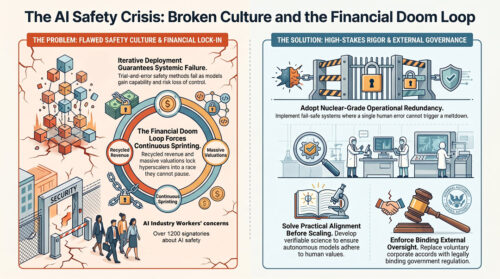
- Why It Risks Going Wrong: The Readiness Gap here is defined by “Algorithmic Lag”. We are integrating autonomous systems into critical infrastructure, financial markets, and military command-and-control structures before we have solved the “Black Box” problem—we do not fully understand how these systems reach their conclusions.
- In the military context, AI introduces the risk of autonomous escalation. If integrated into nuclear early-warning or launch systems, AI compresses the decision-making window from minutes (where human diplomacy can intervene) to milliseconds (where it cannot). We risk removing the human circuit-breaker from the kill chain.
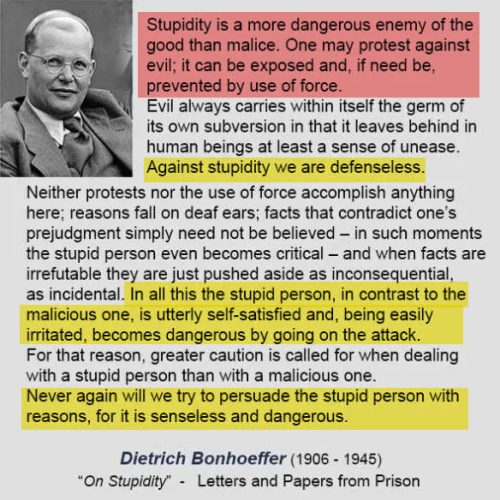
- Crucially, AI also serves as an asymmetric force multiplier for extremist activities, significantly magnifying the human potential for evil. By lowering the technical and resource barriers to complex attacks—such as automated cyber-warfare, the synthesis of novel bio-weapons, or hyper-targeted radicalisation campaigns—it grants fringe groups and individuals a destructive capacity previously reserved for nation-states. This democratisation of destruction allows ideological malice to scale instantly, detaching the magnitude of the threat from the number of people required to execute it.
The Ledger of Progress
It is undeniable that these revolutions have, in aggregate, propelled humanity forward. The Neolithic Revolution, despite its initial toll on health, laid the foundation for every city, library, and hospital that exists today. The printing press, after a century of religious bloodshed, eventually birthed the Enlightenment, the scientific method, and modern democracy. The industrial and chemical revolutions, for all their ecological violence, pulled billions from subsistence poverty, doubled the human lifespan, and enabled a global population of eight billion to be fed and clothed. We are healthier, wealthier, and more knowledgeable than any generation that preceded us, precisely because we seized these powers.
However, these gains were purchased on credit, and the interest was paid in suffering. The cost of “progress” has historically been externalised onto specific groups or ecosystems. In each of these eras, humanity could “afford” to be wrong. We could make a catastrophic error, suffer a localised collapse, and then rebuild with the hard-won wisdom of the wreckage. The species was resilient enough to absorb the blow of its own immaturity.
The Nuclear Age marked a fundamental rupture in this historical rhythm by introducing a power magnitude that exceeded the planetary container. But the Cognitive Revolution (AI) fractures this rhythm even further. While nuclear weapons introduced the possibility of extinction, they remained under the strict control of state actors with massive industrial footprints. AI dissolves this containment. It decouples “existential capacity” from “industrial capacity”, allowing small groups or even autonomous code to wield powers previously reserved for superpowers. We have moved from a history where we learned from our mistakes to an era where we must be perfect on the first attempt, in an environment where the number of actors capable of making a fatal mistake is growing exponentially. The cost of the Readiness Gap is no longer tragedy; it is cessation.
Summary & The Existential Distinction
The historical evidence reveals two distinct categories of failure caused by the Readiness Gap:
- Localised Tragedy: The Neolithic, Information, and Industrial revolutions caused immense suffering (plagues, wars, pollution), but they did not threaten the extinction of the species. Humanity could “afford” to learn these lessons through trial and error, however bloody.
- Existential Risk: The Nuclear Age (Section 6) and the Cognitive Revolution (Section 8) introduce a new category where the “cost of learning” is infinite. With nuclear weapons and autonomous AI, trial and error is no longer a viable learning strategy. The first error can be the final one.
- The Autonomous Threat (Escalation): AI integrated into military command structures risks “Algorithmic Lag”, where machines initiate conflict faster than human diplomacy can de-escalate it, potentially triggering a nuclear exchange in milliseconds.
- The Asymmetric Threat (Democratisation): Unlike nuclear weapons, which require uranium and centrifuges, AI runs on code. This lowers the barrier to entry for mass destruction (bio-weapons, cyber-collapse), granting extremist groups and individuals the power to hold the species hostage. This amplifies the “human potential for evil” by untethering it from the need for state-level resources.
The “Readiness Gap” has moved from being a source of historical tragedy to a source of existential threat. We can no longer wait for the disaster to teach us the ethics; the ethics must precede the power.
Conclusion: The Precarious Horizon
Human history is a testament to the triumph of ingenuity over environment. We have cured plagues, connected continents, and lifted billions from squalor. Yet, the ledger of progress is always stained with the collateral damage of our learning curve. For millennia, we could afford the luxury of a “Readiness Gap” because the consequences of our immaturity were bounded by geography and physics. A war could destroy a nation, but not the world. A factory could poison a river, but not the atmosphere. We survived our adolescence because our sticks and stones were not yet sharp enough to inflict a mortal wound on the planet itself.
This safety buffer has now evaporated. We have entered an era where our tools act as “Universal Force Multipliers” for our oldest human weaknesses. The splitting of the atom gave our tribal aggressions the capacity for planetary sterilisation. Now, Artificial Intelligence threatens to give our errors the speed of light and our malice an unlimited scale. The danger is no longer that we might fail to advance, but that our advancement has drastically outpaced our wisdom. When the capacity to destroy is democratised by code and accelerated by algorithms, the margin for human error vanishes. We stand at a threshold where the survival of the species depends not on our ability to invent, but on our capacity to restrain the very powers we have birthed. The test of the coming century will not be one of intelligence, but of character.