


Estimated reading time at 200 wpm: 15 minutes
The group chat, pretentiously named The Committee for Public Safety, had been dormant for three months. It blinked to life on a rainy Friday night.
Whether or not you agree our Fat Disclaimer applies
Elara [20:14]: [Link: Billy Joel – Just the Way You Are]
Elara [20:15]: Is this the most romantic song ever written, or a toxic plea for stagnation? I need coffee and opinions. Tomorrow.
Tarek [20:23]: I plan to spend Saturday not speaking. Also, hello to you too.
Elara [20:24]: Actually, don’t answer yet. Read this. It explains why the song is a trap.
Elara [20:24]: [File Attachment: Transactional_Intimacy_and_Functional_Permanence.pdf]
Walker [20:26]: “Developmental Origins and Functional Permanence.” Light weekend reading, Elara?
Walker [20:27]: The grounds are looking particularly lush, though the peacocks are being noisy. Come to the canopy. 10 AM. I’ll have Jeeves prep the deck.
Tarek [20:28]: Homework on a Friday. You know how to party.
Tarek [20:29]: Fine. But if we are dissecting clinical papers and 70s soft rock, I’m bringing whisky to put in the coffee.
Tarek [20:30]: And Walker, fix your driveway. It’s not a driveway; it’s a suspension test.
Elara [20:31]: See you there.
Arrival
Walker’s residence in Northampton isn’t just a house; it’s a statement on the permanence of history and the irrelevance of modern convenience. The most aggressive feature is the driveway—a quarter-mile of loose, decorative gravel that sounds like you are driving over expensive china.
It was 10:05 AM on Saturday. The sun was fighting a valiant battle through the clouds, illuminating the sprawling lawn that rolled down from the house like a green carpet unfurled for giants.
Walker sat under the large white canvas canopy on the raised decking, reading a newspaper that was, naturally, made of actual paper. He wore a linen shirt that probably cost more than Tarek’s first car, looking irritatingly fresh.
The crunching of tyres announced Tarek’s arrival in his Bentley. A few moments later, Tarek walked up the wooden steps, looking like a man who had already engaged in a battle with the morning and lost.
“I aged two years driving from the gate to the house,” Tarek said, bypassing a greeting entirely. He slumped into one of the wicker chairs. “You know, they invented tarmac in the last century. It’s very popular.”
Walker folded his newspaper, smiling. “Tarmac is for car parks, Tarek. Gravel is for arrival. It gives you time to compose your thoughts. You look tired. Migration?”
“Data migration,” Tarek corrected, accepting the coffee Walker poured from a silver pot. “Moving a client from a legacy system to the cloud. It’s like trying to move a herd of cats into a helicopter. I need this caffeine.” He took a sip, then gestured vaguely at his phone. “And the dense paper she sent didn’t help. ‘Functional Hardwiring.’ Cheery stuff.”
“It was… thorough,” Walker agreed diplomatically. “Well, brace yourself. Here she comes.”
The polite crunch of gravel was abruptly silenced by a V12 roar that sounded like a mechanical dragon gargling bolts. Elara’s Lamborghini Revuelto drove up the path threatening the landscape into submission; the engine’s grunt making the very gravel stones vibrate in terror. Moments later, Elara appeared at the bottom of the steps – just two to the canopy area.
Tarek squinted over the rim of his cup. Something was different. Usually, Elara would arrive with the energy of a corporate raider—sharp lines, severe heels, and a look that suggested she had already identified three inefficiencies in your garden design. Not this time.
Today, she was wearing a soft, oversized knit jumper and… were those sneakers? She looked less like she was arriving to win a debate and more like she was expectant of something rather different.
“You’re late,” Tarek noted as she climbed the stairs.
“I was admiring the rhododendrons,” Elara said, dropping into the seat opposite them. She took a deep breath of the country air. “Okay. I didn’t drag you both out here just for the view. Did you read it?”
Walker signalled to the open French doors, to Jeeves, invisible but ever-present. He moved to place a fresh tray of croissants, bacon and scrambled eggs just inside the threshold. “We read it, Elara. Though usually, I prefer my clinical theory with a side of Remy Marin XO Cognac, not breakfast.”
“The paper is the context for the song,” Elara said, diving straight in. She picked up a croissant but didn’t eat it; she just held it like a piece of evidence. “The paper argues that ‘unconditional acceptance’—the thing Billy Joel is singing about—is structurally asymmetric. It works for therapists, but if you apply it to a partnership, you create a monster.”
Tarek caught Walker’s eye, a dry, resigned smile tugging at the corner of his mouth as he leaned back. It was the look of a man watching a fuse being lit. “Here we go.”
“Think about the logic,” Elara pressed, waiting for Jeeves to vanish. “The paper says the ‘romantic ideal’ creates a dynamic where one person adapts and the other remains fixed. If I follow the song’s advice—if I ‘don’t go changing’—am I just demanding that the other person orbit me? Am I creating that… what did the paper call it? That ‘Self-Maintaining System’?”
The Steamroller
The moment hung there, fragile, until Jeeves materialised. With the silence of a ghost and the precision of a surgeon, he placed a fresh pot of Earl Grey on the table and offered a crystal tumbler of whisky to Tarek. Tarek raised a hand, shaking his head gently. “Not this morning, Jeeves. Just the cream.” The intervention was so discreet it acted as a physiological reset button for the table.
“You are conflating pop music with pathology, Elara,” Tarek said, pouring a generous amount of cream into his coffee. “But I see the point. The paper describes a system that refuses to update its own software. It defends against disruption. If you refuse to change, you aren’t being ‘authentic.’ You’re just… hardware constrained.”
“Precisely,” Elara said. “If I don’t adjust, if I don’t ‘try to please,’ then I’m just existing at someone. I’m not a partner; I’m a steamroller. I just flatten everything in my path with my own personality because ‘integrity’ tells me not to change.”
Walker cleared his throat, carefully buttering a piece of toast. “I think the distinction the paper draws is quite useful here,” he said, his tone measured, careful not to look directly at Elara. “It notes that unconditional regard is a therapeutic tool. It works because the therapist has no skin in the game. They don’t have to share a bathroom or a bank account with the client. They can afford to be a mirror.”
“Exactly,” Elara nodded.
“But a marriage—or any serious entanglement—is not a clinic,” Walker continued, looking out at the lawn. “The clinician in me would argue that if you treat a partner like a therapist—expecting them to accept your ‘functional hardwiring’ without complaint—you are essentially asking to be treated like a patient, not an equal. The song is a fantasy because it promises the safety of a clinic with the intimacy of a lover. In the real world, those two things are mutually exclusive.”
“So we should change,” Elara said, her voice dropping a decibel. “We have to break the template.”
“We have to allow for ‘bidirectional adaptation,’” Tarek quoted, looking pleased with himself. “Which is a fancy way of saying: if he hates your cooking, learn to cook better or order takeaways. If you hate his movies, negotiate.”
“It’s deeper than movies, Tarek,” Elara said, and for a second, the intellectual intensity flickered, replaced by something softer. “I’m worried that my ‘default architecture’—my need to dissect, to analyse, to win—is the thing that needs to be demolished. But if I demolish it… what’s left?”
Walker smiled gently. “You don’t demolish the house, Elara. You just renovate the guest room. Make some space for a visitor.”
The Structural Flaw
“I think I’m trying to renovate,” Elara admitted, putting the untouched croissant down. “But I suspect I’m just inspecting the foundations and condemning the building.”
Tarek and Walker exchanged a glance. The subtext had finally breached the surface.
“Who is he?” Tarek asked. No sarcasm. Just the scalpel.
“His name is Julian. He’s… steady,” Elara said, the word sounding foreign in her mouth. “He’s not intense. He doesn’t treat conversation like a chess match. He’s kind.”
“Disgusting,” Tarek said, deadpan with a tinge of sarcasm.
“I know what you’re getting at Tarek. Actually it’s terrifying,” Elara corrected. “Because I can’t stop… processing him. The article talks about how people with a ‘transactional template’ view connection as an exchange. I realised last night that I’m treating him like a project. I’m trying to ‘provide value’ by optimising his life because I don’t know how to just exist in it.”
Walker leaned forward. “Optimise how?”
“Okay. We watched a movie,” Elara said, rubbing her temples. “A mindless action film. He was enjoying it. And I spent twenty minutes pausing it to explain why the plot structure was derivative and the character motivations were inconsistent with the first act.”
“And?” Walker prompted.
“And he just smiled,” Elara said, looking genuinely distressed. “He didn’t debate me. He didn’t get defensive. He just said, ‘I know, Elara. But I just like the explosions.’”
She looked up at them. “I felt terrible. I realised I was doing exactly what the paper described—I was defending against the disruption of simple enjoyment. My ‘functional hardwiring’ requires me to be the smartest person in the room, to make the interaction ‘useful.’ If I stop correcting him… am I adapting? Or am I just faking a lobotomy?”
“You’re worried that if you aren’t the Editor-in-Chief, you have no role in the relationship,” Tarek observed. “You think if you aren’t providing ‘intellectual upgrades,’ the transaction fails?”
“Yes,” Elara whispered. “If I’m not fixing him, why would he keep me? Why am I even thinking this?”
The Toll Booth
The question hung in the air, heavier than the humidity building under the canopy. A peacock cried out in the distance—a harsh, mournful sound that seemed to underscore the absurdity of three highly intelligent people struggling with the collision of emotion and logic.
“Elara,” Walker said softly, his voice losing all traces of his usual performative wit. “You are describing a toll booth.”
She blinked, the vulnerability in her eyes momentarily shielded by confusion. “A what?”
“A toll booth,” Walker repeated, gesturing vaguely toward the entrance of his estate. “By your own admission you have built a fortification around yourself. I am frightfully cautious not to appear to be psychoanalysing you. Your own words suggest that you believe that for anyone to enter, they must pay a tax—usually in the form of intelligence or debate. And conversely, you believe that for you to be allowed in anyone else’s territory, you must pay a fee. You must provide a service. An upgrade. A correction.”
“It’s the transactional template,” Elara murmured, referencing the paper. “I’m trying to pay for my ticket.”
“Exactly,” Walker said. “And Julian… Julian just walked around the gate. He didn’t pay the tax. He didn’t ask you to pay yours. He just sat down to watch the film and was happy with the explosions. It was too simple. And that seems to terrify you perhaps— you have no control.”
Before Elara could respond, the soft clink of china broke the tension. Jeeves had appeared at her elbow, not to offer anything new, but to gently remove the cold, untouched coffee cup in front of her.
“A fresh start, madam?” Jeeves asked, his tone neutral but his timing, as always, impeccable. He placed a warm cup in its place and vanished before she could even nod.
Tarek leaned forward, resting his elbows on his knees. “And about the lobotomy,” he said, picking up the thread with his usual pragmatic cadence. “You are confusing ‘silence’ with ‘stupidity.’ They are different functions.”
Elara wrapped her hands around the warm cup. “Are they? If I see a flaw and I don’t point it out, am I not just pretending to be less than I am?”
“No,” Tarek said firmly. “Think of it like CPU usage. Running ‘Critical_Analysis.exe’ at 100% capacity on a mindless action movie isn’t a sign of superior intelligence, Elara. It’s a resource leak. It’s inefficient.”
He waved towards her, not accusingly, but instructively. “When you stop correcting him, you aren’t deleting your software. You are just running it in the background. You still see the plot holes. You still know the script is derivative. But you choose not to output the error logs to the user interface. That isn’t dumbing yourself down. That is… strategic bandwidth conservation.”
Elara looked from Tarek to Walker. The panic that had driven her Lamborghini up the driveway was beginning to recede, replaced by a cautious curiosity.
“So,” she said slowly. “I don’t have to change the hardware or software? I just… minimize the window?”
“You keep everything.” Walker affirmed. “Because one day, Julian will have a crisis that requires a structural engineer, not a fan of explosions in action movies. And on that day, you will be exactly what he needs. But until then…”
Walker raised his coffee cup in a mock toast.
“Until then,” Tarek finished, smiling for the first time that morning. “Let the man enjoy the explosions.”
Elara looked down at her coffee, then up at her friends. A small, genuine smile broke through the analysis.
“So unlike the zebra,” she said softly, “I don’t need to change my stripes.”
She picked up the croissant she had been interrogating for the last hour and finally took a bite.
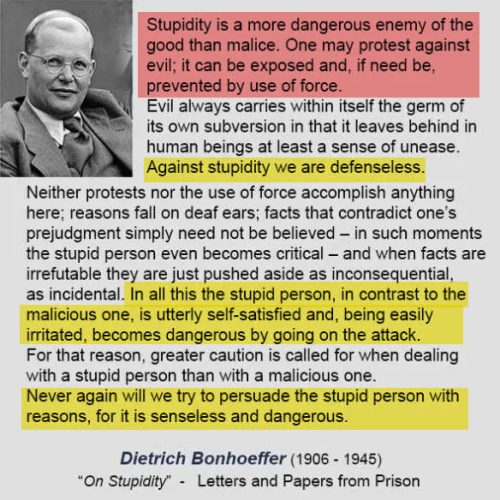
“Selective stupidity,” she mused, chewing thoughtfully. “I suppose I can try it.”
“Not stupidity,” Walker corrected gently. “Peace, Elara. It’s just peace. You ‘Don’t go changing’ and you’re ‘not changing’ him.” – gesturing the single quotes.
He leaned back, his eyes drifted over the estate. “In my experience, the relationships that tend to endure are not built on the static acceptance Billy Joel croons about. That is a myth for teenagers. They are built on two things: reciprocity and adaptation.”
Walker gestured to the landscape around them—the ancient trees, the carefully managed gardens. “Reciprocity is not a ledger, Elara. It is not ‘I fixed your grammar, so you must love me.’ It is the mutual agreement to be changed by one another. To let his calm dilute your chaos, and your fire warm his stone. And adaptation… adaptation isn’t surrender. It is simply the structural integrity required to keep the bridge from snapping in the wind.”
“But Walker,” Elara added. “The article is about personality disordered people. I’m not like that.”
“Of course, you’re not.” He responded. “However, the foundations of the article are based on well-accepted theory about patterns in human personality structures. It just so happens that for some people, they end up at an extreme end called ‘personality disorder’. In reality all of our personalities – even if non-pathological – shape into structures that we take as our norm, even if we’re not pleased with ourselves. Almost invariably, the personality structure and patterns will dominate our world view, our interactions and relationships.”
“I see what you mean.” She replied. “It’s not about who is disordered and who isn’t. The article is deeper than I first realised. Thanks for your insight on that.”
Rounding up and departure
The silence that followed wasn’t heavy; it was settled. The kind of silence that only comes after the main course of a conversation has been fully digested.
Walker checked his watch. “11:30 AM. We have solved the mysteries of human intimacy, analysed Billy Joel’s poor advice, and still have time for lunch. I believe Jeeves has prepared a wild mushroom risotto.”
Tarek checked his phone, grimacing at the notification screen. “I can’t. I have three hundred thousand user records waiting to be migrated. If I don’t get back, the cats will unionise.”
“Abandoned for data,” Walker sighed theatrically. “And you, Elara?”
Elara stood up, stretching her arms overhead, the oversized jumper shifting. She looked lighter than she had when she arrived—the tension of the ‘toll booth’ replaced by a new, tentative resolve.
“I can’t stay either,” she said, picking up her phone. “There’s a matinee showing of Fast & Furious 19 or whatever number they are on now. Lots of explosions guaranteed! I think I’m going to go… practise my background mode.”
“A bold experiment,” Walker smiled, remaining seated. “Good luck with the explosions.”
“Thank you,” she said, pausing at the top of the stairs. She looked back at them, her eyes bright. “And thank you for the coffee. And friendly exploration of all this.”
“Anytime,” Tarek grunted, standing up to follow her. “Just try not to break the sound barrier on the way out. Some of us have hangovers we haven’t even earned yet.” with a wink.
Walker watched from the deck as they descended. The mechanical roar of the Lamborghini soon shattered the peace again, followed shortly by the crunching protest of Tarek’s suspension against the gravel.
As the sounds faded into the distance, silence reclaimed the estate. Walker poured the last of the coffee into his cup, listening to the wind in the trees and the faint cry of a peacock. He took a sip, alone in the quiet, satisfied that for today, at least, the bridge had held.