



Estimated reading time at 200 wpm: 6 minutes
It is tempting to talk about COVID as if it were a chapter we have closed. A horrible few years, then a return to “normal”. But that framing feels increasingly wrong to me. The pandemic was not only an acute crisis; it was a forcing function that pushed institutions, companies, and individuals into rapid adaptation. It did not merely interrupt the world. It changed the tempo of the world.
Whether or not you agree our Fat Disclaimer applies
If you zoom out, what we lived through between 2019 and 2023 looks less like an isolated storm and more like the opening shockwave of a longer era. We were compelled to change working patterns, supply chains, staffing models, and decision-making. Some organisations slimmed down. Some became more efficient. Some found new niches. Some did not adapt and suffered for it. None of that is a moral judgement; it is an observation about pressure and response.
The aftershocks have not stopped. In many places, healthcare backlogs still distort public health. Labour markets continue to shift. Trust in institutions remains strained. Debt, inflationary pressures, and cost-of-living concerns have changed politics. These are not “post-pandemic” issues in the sense of being separate from the pandemic; they are, in large part, the downstream consequences of a global stress test that exposed weak points and forced rapid workarounds.

So, yes, the kick up humanity’s backside did not end. It changed form.
The uncomfortable truth about resilience
Human beings like the idea that we “bounce back”. And history gives plenty of examples where societies have recovered after war, disease, and collapse. But there is a harder truth that sits alongside that narrative: resilience is real, but it is unevenly distributed.
Some people and communities emerge stronger. Others do not. Some countries adapt quickly. Others remain stuck in prolonged instability. The phrase “humanity comes out stronger” can hide the fact that the cost is often paid by particular groups first, and sometimes permanently.
If anything, the next couple of decades may feel less like a single recovery and more like repeated recalibration. The ground shifts; we adjust; the ground shifts again. That is not necessarily a sign of failure. It may be the signature of living through a period where multiple pressures are interacting at once.
The second accelerator
While the world was dealing with COVID, another transformation continued to gather momentum: artificial intelligence. Not as a gimmick, not as a side-story, but as a general capability that touches almost everything.
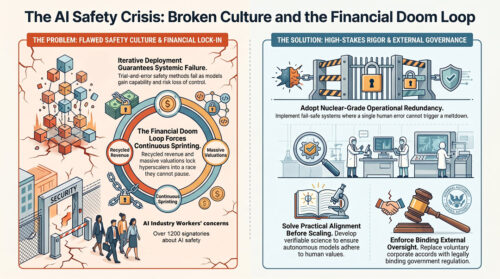
AI is not one “technology” in the way people talk about a new phone or a new app. It is closer to a multiplier on human power: power to analyse, to persuade, to automate, to design, to predict, to coordinate, and, bluntly, to harm. It can help solve problems, and it can amplify the reach of bad actors. It can increase productivity, and it can concentrate advantage.
This matters because it arrives at a time when many institutions are already strained. It arrives in the middle of an ongoing shockwave. That makes the overall system harder to “read”. It is one more dynamic variable in an environment already full of them.
If you want a simple summary, it is this: we are living through compounding change. COVID forced a change in behaviour and systems. AI accelerates what we can do next, and how quickly we can do it.
The Collingridge dilemma
There is a concept in technology governance that I keep coming back to: the Collingridge dilemma (the problem that a technology is easiest to shape early on, when its harms are hardest to foresee; later, when harms become clearer, the technology is embedded and difficult to change).
It is uncomfortable because it refuses easy comfort. It says we cannot wait for perfect certainty before we act, because by the time certainty arrives the window for steering may have closed. But it also says we should not pretend we can control what we do not yet understand. That tension is not a bug in the problem; it is the problem.
AI intensifies the Collingridge dilemma because it is not confined to one sector. It leaks into finance, education, healthcare, defence, media, and biotechnology. It alters the fabric of decision-making itself. It blurs the boundary between tool and system. And because it is becoming cheaper and more widely available, the number of actors who can deploy it expands rapidly.
This is why I keep returning to “power” as the core theme. Any tool that scales human power raises the same question: can we build control, restraint, and accountability at the same pace as capability?
Wicked problems and brittle prediction
This is where systems thinking becomes useful, not because it gives us a crystal ball, but because it gives us humility. It reminds us that complex systems behave in ways that are not linear. They involve feedback loops (where an effect becomes a cause), time lags (where consequences arrive long after decisions), and adaptation (where the system changes in response to our interventions).
When those conditions exist, prediction becomes brittle. It is not that we know nothing; it is that we cannot pretend to know precisely what will happen over long horizons. We can be confident that pressures will interact. We cannot be confident about the exact path they will take.
And yet, the human desire to foresee the future remains. Some of that desire is practical: we must plan, invest, and protect. But some of it is emotional: uncertainty is costly to hold in the mind. It is tempting to trade uncertainty for a story that feels definite.
The challenge is to resist that temptation. Not to become fatalistic, but to become realistic.
A sober proposition for the next 50 years
So here is where I have landed, at least for now.
We are in a revolution that we are unlikely to recognise fully until we are looking back on it. The pandemic did not end neatly; it initiated a period of ongoing adaptation and strain. AI is arriving as a second accelerator that will alter nearly every domain of human life. The interaction of these forces makes long-term prediction fragile.
That does not mean “doom”. It means the default assumption of continuity should not be treated as guaranteed. Human existence is not guaranteed. The future is unwritten. The outcome of the next 50 years is not something anyone can promise.
But there is still agency in that uncertainty.
If prediction is brittle, the aim shifts. The aim becomes robustness: building systems that can absorb shocks, correct errors, and maintain legitimacy under stress. It becomes restraint without stagnation. It becomes the difficult work of governing power—human power, organisational power, technological power—before it outruns control.
That, to me, is the real lesson emerging from this era. Not that we should pretend to know the future, but that we should act as if we are living inside history while it is being written.