



Estimated reading time at 200 wpm: 16 minutes
It is 17 January 1998. President Bill Clinton sits in a deposition in the Paula Jones civil case. A written definition of “sexual relations” has been placed before him. As narrowed by the judge, it states that a person engages in sexual relations when that person knowingly engages in or causes contact with the genitalia, anus, groin, breast, inner thigh or buttocks of any person with an intent to arouse or gratify the sexual desire of any person. By August 1998, the Office of the Independent Counsel had formally expanded its jurisdiction to determine whether Clinton committed criminal perjury during the January deposition (and in subsequent sworn affidavits), or attempted to suborn perjury by coaching witnesses (such as his secretary Betty Currie and Monica Lewinsky).
Whether or not you agree our Fat Disclaimer applies
Between Between 11:45 AM and 12:00 PM EST on 17 January 1998 (Tape 1 of the videotaped deposition), the following was the Q/A:
Attorney James Fisher asks the decisive question: “I think I used the term ‘sexual affair.’ And so the record is completely clear, have you ever had sexual relations with Monica Lewinsky, as that term is defined in Deposition Exhibit 1, as modified by the Court.”
Clinton answers: “I have never had sexual relations with Monica Lewinsky. I’ve never had an affair with her.“
Subsequently Clinton said the same to the media.
The physical acts were already known or strongly indicated to those following the matter. Oral sex had occurred. Yet the answer was able to stand, at least on the narrow ground Clinton later defended, because he read the definition as requiring him — the person being deposed — to be the one making contact with the other person’s listed body parts. When she performed oral sex on him, the contact was with his body. On that reading the definition was not engaged. The question had been carefully framed by reference to a formal definition intended to remove ambiguity. The respondent found a path through the exact words. The full outcome is not a matter this article will prevail upon. Those who wish to be distracted can go here: Clinton–Lewinsky scandal – Wikipedia.
This episode is not an isolated curiosity. It illustrates one pole of a recurring problem in serious inquiry: questions that are highly specific or definitional can still leave navigable linguistic routes that allow the heart of the matter to remain unaddressed.
The opposite pole is equally common and more widespread. Questions that lack sufficient depth — because those asking them do not possess adequate understanding of the underlying subject — never reach the decisive territory in the first place. Honest answers are given to process-level or chronological questions, and the real mechanisms, data, constraints and decision criteria stay largely unexamined.
This article examines both failures and the spectrum that lies between them, specifically in inquisitorial circumstances. This article does not cover prosecutorial lines of questioning. The quality of any inquiry that seeks the heart of a matter is limited by the nature, content, framing and sequence of the questions that are put.
1. Classic examples of navigation
The Clinton deposition of January 1998 is only one instance of a recurring pattern. When a question is framed with high specificity or rests on a formal definition, a sophisticated respondent can sometimes remain inside the exact wording while the substance of the matter stays largely unaddressed. Two further examples illustrate the same mechanism in different historical settings.
In Bronston v. United States (1973), Samuel Bronston was examined under oath in a bankruptcy deposition. Counsel asked whether his company had any Swiss bank accounts. Bronston replied that the company had had an account in Zurich for a period of time. The answer was literally true. What he did not say was that he personally still maintained a Swiss account. The existence of that personal account was known or readily discoverable. The United States Supreme Court held that a literally true but unresponsive answer does not constitute perjury. The decision remains the leading American recognition that a witness may stay within the words of the question while leaving its evident purpose unfulfilled.
A more systematic version of the same technique appears in the early modern doctrine of mental reservation used by English Jesuits and their supporters. Under interrogation, priests and lay Catholics were routinely asked whether they were priests or had harboured priests. The authorities frequently already knew or strongly suspected the facts. The doctrine permitted an audible answer that was true only when a silent mental qualification was added — for example, “I am not a priest” with the unspoken addition “in the sense you mean, or so as to reveal him to you.” The spoken words remained technically defensible. The ordinary meaning of the denial was false. The method was developed precisely because the questions, however direct, still left linguistic room that could be exploited when the underlying reality was already largely known.
In each case the question was clear enough, and the relevant facts were not genuinely in dispute. The respondent nevertheless found a path through the wording that allowed the heart of the matter to remain only partially engaged. Tight framing does not automatically produce decisive inquiry.
2. Questions that lack depth
The more common failure is not the exploitation of tight wording but the absence of sufficient depth in the questions themselves. When those who control the questioning lack real familiarity with the underlying subject, questions tend to remain at the level of process, chronology and formal compliance. They ask whether something was considered, when it was first suspected, what policy was followed, or whether guidance was reviewed. Honest answers are readily given. The decisive material is never demanded.
This is not primarily a matter of poor drafting technique. It follows from a structural asymmetry. Lawyers, managers, regulators and inquiry chairs are often skilled at testing consistency and mapping answers against documents. They are rarely immersed in the technical, clinical or operational realities of the domain under examination. Without that immersion they do not know which details are decisive, which measurements or records would actually settle the point, or which distinctions matter to those who do the work. As a result they cannot formulate the questions that would force those points into the open.
The pattern is visible across public inquiries, coronial proceedings, regulatory investigations and internal reviews. Transcripts show competent, sometimes persistent questioning that nevertheless leaves the real mechanisms, the actual data and the genuine constraints largely unexamined. The inquiry produces a clear account of what people said they did and when they said they did it. It produces a far weaker account of whether the underlying evidence supported the decisions that were made.
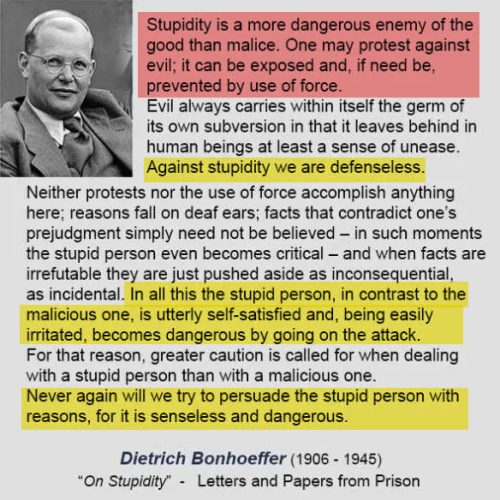
The difficulty is compounded by hierarchy. Specialists appear as witnesses; generalists control the questions. The witnesses can answer truthfully within the frame that has been set and still leave the heart of the matter untouched. The questioners, lacking the necessary depth, do not recognise what has been omitted or how to press further. Depth of understanding is not a luxury in serious inquiry. It is the precondition for questions that can reach the substance.
3. The wider pattern
The limitation is not confined to formal legal or coronial settings. It appears wherever generalists sit above specialists and control the questioning or the decision frame.
Senior managers, executives, board members and regulators routinely ask questions that remain at the level of process, milestones, risk registers, compliance and reported outcomes. They rarely press into the actual mechanisms, the quality of the underlying work, the decisive technical details or the real operational constraints. They do not possess the depth required to know which details matter or how to force them into the open.
The specialist can therefore answer truthfully within the frame that has been set and still leave the true state of the system unexamined. “We reviewed the data,” “the model was validated,” “the design met the specification” or “the risks were considered” can all be accurate answers that conceal whether the review was superficial, the validation used the wrong criteria, the specification itself was inadequate, or the risks were merely listed rather than understood.
The pattern is visible in engineering projects, software development, financial risk, complex operations, scientific research and public administration. In each case the decisive questions tend to be those that only someone with real domain immersion would think to ask. When those people do not control the conversation, the depth is routinely missing. Hierarchical distance combined with genuine asymmetry of knowledge produces questions that satisfy managerial or procedural abstractions while the underlying reality remains only partially explored.
The same structural problem that appears in public inquiries therefore operates daily inside organisations. The quality of decisions is limited by the quality of the questions that senior figures are able to put.
4. The spectrum between the poles
The two failures are not isolated defects. They sit at opposite ends of a spectrum that runs through most formal questioning.
At one end lie questions that lack depth. They remain at the level of process, chronology and stated awareness because those asking them do not know what the decisive material would look like. The inquiry produces a tidy record of what was considered and when, while the actual evidence, measurements, constraints and decision criteria stay off the table.
At the other end lie questions that are highly specific or rest on formal definitions. These are intended to remove ambiguity and close loopholes. Yet the very precision can create narrow linguistic or definitional pathways. A sophisticated respondent may stay inside the exact wording while the known substance of the matter remains only partially engaged. The Clinton deposition, the Bronston examination and the practice of mental reservation all occupy this end of the spectrum.
Between the poles lie many intermediate forms. Questions may be partially informed yet still miss the critical detail. They may be detailed in one dimension while remaining vague in another. They may close one exit route while leaving another open. The common result is the same: the heart of the matter is never forced fully into the open.
Robust inquiry requires questions that are deep enough to reach the decisive territory and well formulated. This avoids creating pathways for navigation that may cause important information to be missed. The quality of the inquiry is limited by where on this spectrum the questions land.
5. Issues to be considered when forming questions
Recall that this article is confined to inquisitorial inquiries and not prosecutorial settings where adversarial-type questions tend to dominate. Nonetheless, some of the principles may be applied for any sort of inquiry.
The failures examined above are not inevitable. They arise when certain recurrent features of question construction are neglected.
Anyone seeking to reach the heart of a matter should take account of the following considerations.
Embedded assumptions Questions often carry unexamined premises. “Why did you fail to do X?” already asserts that X was required and that failure occurred. It’s like asking “Do you still beat your wife?” If the premise is wrong, the answer is forced into a false frame. Assumptions should be surfaced or tested rather than built in.
Scope and boundary setting: A question that is too narrow excludes relevant territory by design. A question that is too broad invites selective or vague answers. The useful range lies between these extremes and is difficult to judge without domain knowledge.
Temporal and aspectual framing: Tense, aspect and time reference create large differences in meaning. “Is there a relationship?”, “Has there ever been a relationship?” and “Was there a relationship at the material time?” are different questions. Careless temporal framing leaves room for navigation.
Definitional control: Whoever sets the operative definition of key terms largely controls what answers are possible. Incomplete, ambiguous or contestable definitions create pathways that can be exploited. Explicit definitions do not automatically solve the problem; they relocate it.
Closed versus open form: Closed questions are easier to answer narrowly. Open questions can generate volume without forcing precision. Neither form is inherently superior. The choice must match the purpose, and follow-up questions must close the gaps the first form leaves.
Sequencing and dependency: Isolated questions are weaker than sequences in which later questions depend on earlier answers and force progressive precision. Poor sequencing allows the respondent to reset the frame at each step.
Linguistic and pragmatic ambiguity: Words carry multiple senses and conversational implicatures. Even careful speakers leave gaps that a motivated respondent can use. High-stakes settings amplify the effect.
Asymmetry of motivation and preparation: The questioner is often exploring. The respondent may have prepared possible readings and exit routes in advance. This imbalance affects how much precision the questions need to carry.
Failure to force underlying mechanisms or data: Process questions (“Did you consider X?”) are easier to answer satisfactorily than questions that demand the actual evidence, numbers, sequence or causal account. The latter are harder to formulate and easier to evade if the questioner does not know what the decisive material would look like.
These considerations should not be taken as optional refinements. They determine whether questions are capable of reaching the substance or whether they remain on the surface or leave navigable cracks. Serious inquiry requires that they be addressed deliberately rather than left to chance or to the default habits of the questioning role.
6. Open questions and sequential inquiry
A single question, however carefully formed, is rarely sufficient. Deep search usually depends on a sequence of open questions that progressively tighten the focus, test earlier answers, and force the respondent further into the actual mechanisms, evidence or causal account.
Open questions are useful at the outset because they allow the respondent to reveal the shape of their knowledge, the categories they regard as relevant, and the limits of what they are prepared to disclose. They are less useful if left isolated. Without deliberate follow-up they can produce volume without precision, or allow the respondent to remain on familiar and safe ground.
The power lies in the sequence. Each subsequent question should be shaped by the preceding answer. It should close an exit that has just been used, demand the next layer of detail, or shift the frame so that inconsistency or incompleteness becomes visible. A well-constructed series reduces the remaining room for surface or partial answers. A poorly constructed series allows the respondent to reset the frame at every step.
The construction of each question within the sequence remains decisive. An open question that lacks depth will still elicit only process-level material. An open question that is loosely framed will still leave linguistic pathways open. Sequence multiplies the effect of good questions; it does not compensate for weak ones.
Astute inquiry therefore treats questioning as cumulative. The aim is not a single decisive exchange but a progressive narrowing that eventually leaves the heart of the matter no remaining place to hide.
7. Further requirements for deep search
Even well-sequenced open questions are insufficient if certain further demands are not made. Deep search requires that the questioning press beyond description into the material that actually determined the outcome.
Force the production of primary material. Ask not only what was concluded or decided, but what contemporaneous notes, data, measurements, records or communications exist and what they show. Process answers (“we reviewed it”) are weaker than questions that require the underlying material to be described in concrete detail or produced.
Separate layers that are often collapsed. Distinguish clearly between what was done, what was known at the time, what was possible, what was considered and rejected, and what the actual decision criteria were. Respondents will often answer only the first of these unless the others are asked explicitly.
Use the respondent’s own standards. Ask what criteria or thresholds they themselves regarded as decisive at the time, then test the facts against those criteria. This is frequently more revealing than imposing an external standard after the event.
Change the frame deliberately. After a line of questions in one register — chronology, process, policy — shift to another: quantitative evidence, operational constraints, professional judgement, or incentives. Inconsistency and evasion often appear at the point of shift.
Test for completeness, not merely accuracy. A true answer can still be radically incomplete. Questions that ask what else was relevant, what factors were set aside, or what would have changed the decision probe the boundaries of what has been disclosed.
Anticipate the likely exit routes. Before asking, consider the narrow readings, definitional moves or temporal distinctions a careful respondent might use. Design the sequence so that those exits are closed or made costly to take.
Deep questioning is cumulative and may appear adversarial to at first glance. However, tact and appropriate delivery can and should make the questions genuinely inquisitorial. Each move should reduce the remaining space in which surface or partial answers can satisfy the inquiry. When these further requirements are neglected, even persistent questioning tends to stop short of the heart of the matter.
Conclusion
Enquiring stands or falls by way questions are constructed. The desire to reach the heart of a matter is common. The capacity to construct and deliver questions capable of getting there is far rarer.
Across public inquiries, coronial proceedings, regulatory investigations, management reviews and hierarchical organisations, the same constraint appears. The depth of understanding possessed by those who control the questioning shapes what can be asked. So does the precision with which terms are framed, the sequence in which demands are made, and the willingness to press beyond process into primary material. Together these elements determine how much of the real situation can be brought into view.
When questions remain at the level of chronology, stated awareness or formal compliance, the decisive evidence stays off the table. Mechanisms and constraints can remain unexamined even when every answer given is honest. When questions are made highly specific or definitional, they can open narrow pathways to avoid a core issue. A sophisticated respondent may stay inside the wording while the known substance is only partially engaged. Most formal questioning lands somewhere between these poles. The inquiry produces a record that looks complete but the heart of the matter can remain largely unexamined.
Careful formulation and delivery reduce that unexamined space. Questions informed by real familiarity with the subject bring about deep exploration of core information.
Sequences of open questions can test earlier answers and shift the frame. They can close the exits that partial responses ordinarily leave open. Distinctions between what was done, what was known, what was possible and what was set aside can be drawn into view.
The practical effect is a clearer view of the underlying reality. Decisions, failures, constraints and judgements become visible in the terms that actually governed them. Accountability becomes more precise. Organisational learning becomes more possible. The inquiry moves closer to the substance it was meant to reach.
None of this occurs automatically. Those who ask the questions must recognise that the form of the question is not secondary to the intention behind it. Getting to the heart of a matter depends on the nature, content, framing and sequence of the questions that are put. Where those elements are neglected, even prolonged and well-intentioned examination tend to stop short.