




Estimated reading time at 200 wpm: 7 minutes
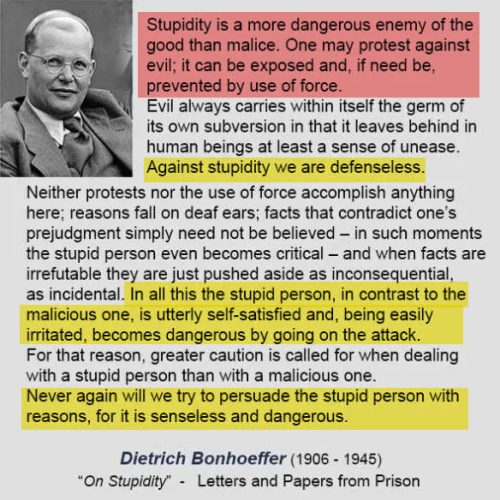
I can fully expect to be most hated and called various names for this article.
Whether or not you agree our Fat Disclaimer applies
Flick through any social media feed on a Friday night and you’ll be met with a familiar sight: artfully arranged plates of food, clinking glasses, and grinning faces bathed in the warm glow of a trendy restaurant. Here in the UK, it seems, going out for a meal has become less of a treat and more of a cultural necessity. It’s the default setting for dates, mates, and celebrations.
But behind the filtered photos and feel-good hashtags, a quieter story is unfolding. Many of us are funding this lifestyle on credit, racking up debt for a slice of the “good life.” We tell ourselves it’s our choice – our money, our priorities. But how much of that choice is truly our own? When we peel back the layers of social expectation and clever financial engineering, we find that our decisions might not be as free as we think.
The Allure of the ‘Grammable Grub’
More Than Just a Meal
Let’s be honest, the appeal is obvious. Sharing food is one of humanity’s oldest rituals. It’s about connection, community, and conversation. In our hectic, modern lives, the restaurant offers a perfect, neutral ground to build those bonds without the faff of cooking and washing up. It’s a convenient and powerful tool for togetherness.
We’ve also been swept up in the “experience economy,” where we’re encouraged to collect memories, not just things. A fantastic meal out feels like an investment in our happiness – a story to tell, a moment to cherish. And who can argue with that?
Curating the “Good Life”
This is where the modern world throws a spanner in the works. Social media has transformed the humble meal into a status symbol. That perfectly plated sea bass isn’t just dinner; it’s content. It’s a carefully curated post that tells the world, “I’m doing well. I’m living a vibrant, successful life.“
This creates a relentless cycle of social proof. We see our peers dining out, and it normalises the behaviour, subtly reframing a luxury as a standard part of a social life. The pressure to keep up, to be seen in the right places, is a quiet but powerful force nudging us towards the booking button.
The Illusion of Choice
The Invisible Hand on Your Wallet
While we’re busy snapping photos, a different kind of architecture is at play. “Choice architecture” is the subtle design of our environment to influence our decisions. Think about how you pay. Handing over a crisp £50 note for a meal feels significant. You physically see the money go.
Now, compare that to tapping a card or your phone. It’s frictionless. The psychological “pain of paying” is almost completely gone. Financial technology is designed to make spending as easy and thoughtless as possible. Add to this the rise of “Buy Now, Pay Later” schemes for takeaways and restaurant meals, and the system is practically begging us to spend money we don’t have. Framing a £60 bill as “three easy payments of £20” isn’t offering choice; it’s exploiting a psychological loophole to encourage spending.
The Scripts We Live By
Beyond the tech, we’re all following cultural scripts. First date? Restaurant. Birthday? Restaurant. Promotion at work? You get the picture. These scripts are so deeply ingrained that deviating from them feels awkward or even anti-social. We’re not actively deciding so much as we are following a pre-written social rulebook, and that rulebook has become very expensive.
A Tale of Two Spenders: Sally and Scrooge… I Mean, Ryan
Let’s look at how this plays out through the eyes of two people.
Sally’s Story
Sally works in admin and, after rent and bills, her disposable income is modest but not great. She’s tight for cash near end of the month. Yet, her calendar is packed. There’s after-work drinks on Thursday, a birthday meal on Friday, and a bottomless brunch on Saturday. Her friends are all doing it, and the thought of saying no and sitting at home with a case of FOMO is unbearable. The all have umpteen photos up on Facebook most weekends of their ‘good life’.
So, Sally taps her credit card. She tells herself she’ll pay it off, that these are essential social investments. But by the end of the month, her balance has crept up again, a quiet hum of anxiety beneath the fun. She feels trapped – socially, she can’t afford to miss out, but financially, she can’t afford to go.
Yet – Sally’s favourte line is “YOLO!!” (You Only Life Once). Her credit card companies love her, and she loves them!
Ryan’s Story
Ryan, on the other hand, is a software developer with plenty of cash to splash. His colleagues often invite him for expensive lunches and post-work cocktails. Ryan politely declines most of the time. He enjoys a meal out, but he has a savings goal: a house deposit. Every expensive meal, in his mind, is a few more bricks he doesn’t have. He’d rather cook for friends at home or suggest a walk in the park.
He doesn’t see this as being miserly. He sees it as making a conscious, deliberate choice that aligns with his long-term goals. It’s a trade-off he’s happy to make.
Photos of Ryan hardly ever appear on Instagram.
Ryan has no credit card ‘debt’.He pays for everything by debit card. You might say he doesn’t even need a credit card.
The Clash of Perspectives
Of course, Sally thinks Ryan is a total Scrooge. “He’s loaded!” she texts her friends after he turns down another night out. “He could afford to treat himself. What’s wrong with him?” For Sally, who is caught in the current of social spending, Ryan’s deliberate choice to swim against it seems bizarre, even stingy. For Ryan, Sally’s spending seems bafflingly short-sighted.
Many of Ryan’s so-called friends, also think “He’s sad“. Nothing could be further from the truth.
Agency vs. The Machine
Are We Puppets or Pilots?
This brings us to the core of it all. Are we simply puppets, with our strings pulled by social media, cultural norms, and financial systems? Or are we the pilots of our own lives?
The truth, as always, is somewhere in the middle. How close to the middle is another issue. The “structure” – the system around us – is immensely powerful. It sets the stage and writes most of the script. To ignore its influence is to misunderstand the reality of modern life.
The Power of the Opt-Out
Yet, we still have “agency.” People like Ryan demonstrate that it is possible to stop, look at the script, and say, “No, I’m going to ad-lib this scene.” It takes conscious effort and a willingness to be different, to potentially be judged as a ‘Scrooge’. It requires defining for yourself what a “good life” really means, beyond the curated feeds.
Conclusion: A Constrained Choice
So, are we freely choosing to spend a fortune on eating out? Yes and no.
We make the final tap of the card. But that action is the endpoint of a chain of powerful influences. It’s a constrained choice – a decision made within a system expertly designed to lead us down a path of consumption.
Recognising this isn’t about blaming the system or absolving ourselves of responsibility. It’s about seeing the full picture. True financial freedom isn’t just about having money; it’s about having the clarity and the courage to make choices that are genuinely our own, even if it means ordering a takeaway and watching a film at home. And there’s certainly no shame in that.