


Estimated reading time at 200 wpm: 9 minutes
The cafe was an olfactory triumph of fresh brewed coffee and passive aggression. A perfect backdrop, Tarek reflected, for Jane’s latest intellectual evolution. He was here because Jane invited him to brunch, but Jane, it appeared, was here to field-test two highly-digestible, conveniently misinterpreted TED Talks. Her enthusiasm was, as ever, a weaponised form of innocence.
Whether or not you agree our Fat Disclaimer applies
“And that’s when it hit me, Tarek,” she began, cradling her turmeric latte as if it were a fragile truth. “My time spent on TikTok isn’t an addiction. It’s a symptom.” She had just come from a talk by Johann Hari on YouTube, and the nuance had, predictably, been an early casualty. “Hari says addiction is a symptom of a lack of connection, right? So my inability to stop watching tiny dogs on TikTok isn’t a personal failing; it’s a profound commentary on the isolation of the modern city. I’m traumatised; not addicted.”
Tarek took a sip of his flat white, a beverage engineered for comfort in a world of discomfort. Right, he thought to himself, Hari’s book, ‘Chasing the Scream’, was about the war on drugs and the devastating effects of social disconnection on substance abuse. Jane’s version is about a slow Wi-Fi signal and her own boredom. He offered a gentle interjection. “I believe he was specifically talking about… well, actual narcotics, and a lot of social data.”
Jane responded with the universal gesture of someone whose profound insight has just been inconvenienced: a slow, pitying shake of the head. “You’re thinking too clinically. It’s all a spectrum – it’ss all relative. The societal trauma that leads to opioid addiction is the same one that makes me compulsively check my Instagram while I’m talking to you. It’s all trauma.”
Tarek blinked. The pivot was here, right on schedule. The second talk.
“Which brings me to my real breakthrough,” she continued, now in full Gabor Maté mode. “My ADHD isn’t a disorder. It’s a trauma response. My inner child is just screaming because I was never truly seen.” She punctuated this with a sharp inhale, as though the air itself was validating her diagnosis. “You know, all those times my mum told me to clean my room? It wasn’t a lesson in responsibility; it was a denial of my right to exist in my own beautiful chaos. My inability to, you know, finish a task is just a primal protest.”
A protest against coherence, Tarek’s internal monologue supplied. He was forced to offer a rejoinder, a tiny, rational flare in the fog of Jane’s wellness-driven logic. “Jane, the consensus in a lot of research is that ADHD is a neurobiological condition, a lot of it genetic. Trauma can make the symptoms worse, but it’s not the cause.”
Jane’s gaze intensified. “No, no, no. You’re using science to invalidate my feelings. My body knows the truth. My resistance to any form of effort is a direct manifestation of this deep-seated need for control. It’s a protective measure coming from my traumas.“
He reached into his jacket pocket and pulled out his latest Samsung Galaxy Z-fold. Its large, flat screen unfolded like a second chance. “That is incredible, Jane,” he said, his voice now a low, rumbling hum of pure, unadulterated interest. “Do you mind if I just… take some notes?”
Jane beamed, her face a portrait of vindication. As she began another rambling monologue about the importance of emotional consent in retail transactions, Tarek began scribbling furiously. He wasn’t transcribing her wisdom, of course. He was typing a new subject line for a forthcoming blog post: The Brunch Prophet: A Guide to Selling Self-Help to People Who Blame Trauma for Their Financial Decisions.
In fact,” she said, her voice dropping to a conspiratorial whisper, “this latte bill? It’s a manifestation of my trauma-informed budget.”. This meant she was broke! Tarek’s eyes widened a fraction. The sheer, breathtaking audacity of the statement left him momentarily speechless. His mind, however, was already racing. This wasn’t just absurd; it was financially actionable. This was a goldmine of material. Tarek covered the bill, seeing all this as an investment of his time. The conversation wound down and Tarek thanked Jane for the information.
Tarek’s phone call to Walker
The faint hum of his washing machine was the only rational sound in Tarek’s apartment. A day had passed since his ill-fated brunch, and he needed a debrief with the one person who could translate chaos into a dry conceptual framework. He phoned Captain Walker.
“Captain, Tarek here. Hope I’m not interrupting a moment of profound contemplation.”
“Not at all. You’ve caught me in the middle of a rather profound contemplation on the structural integrity of a biscuit,” Walker replied, his voice a calm, even instrument of analysis.
“You know, that dinner we had a few weeks ago. It was so memorable,” Tarek mused, a ghost of a wry smile on his face. Walker remarked, “The food, the wine—it was all a testament to the virtues of a well-calibrated life. A meticulously constructed reality, right? ”
Walker’s low chuckle was audible on the line. “The rendang consistency score was quite impressive, I’ll admit. And that Château d’Yquem was a beautiful, non-negotiable fact. It was a good night, Tarek. A controlled experiment in order.”
Tarek sighed, the frustration of the previous day bubbling up. “Precisely. That’s why I’m calling. My world has been infiltrated. A new problem has emerged. I had brunch with Jane yesterday. It was… a journey into the unquantifiable.”
There was a brief, almost imperceptible pause on the other end of the line. A seasoned observer would have noted the subtle change in Walker’s tone—the sound of a man always prepared to enter a kind of psychotic battlefield.
“Lay it on me, Tarek,” Walker said.
Tarek took a moment to compose himself, his thumb flicking over the screen of his Samsung Galaxy Z-fold. “Okay. Here are my notes from the conversation with Jane,” he began, reading directly from his phone. “She’s taken a couple of lectures and fused them into a single, terrifying new belief system. The key takeaways from my transcript are as follows:
- Doom-scrolling isn’t a personal failing; it’s ‘societal disconnection.’ She insists it’s a symptom of a larger cultural problem, not a personal bad habit.
- Her lack of follow-through isn’t ADHD; it’s a ‘trauma response.’ She now frames her difficulty with tasks as her inner child protesting against her mother’s desire for a clean room.
- Her inability to pay for her half of the brunch bill is a ‘trauma-informed budget.’ This, I believe, is the central pillar of her new philosophy.”
- Her obsessions with Johann Hari and Gabor Mate, she worships their words. Hari on addiction and Mate on trauma as an explanaton for ADHD.
Tarek went on to recount the exasperating details—his tiny, rational interjections met with her patronising shakes of the head, and his final, desperate act of pulling out his Galaxy Z-fold to ‘take notes,’ which were really a list of future blog post ideas.
Walker’s commentary
“I’m listening, Tarek,” Walker finally said, his voice as unruffled as a perfectly ironed uniform. “This isn’t a new phenomenon. I’ve been observing it for some time.”
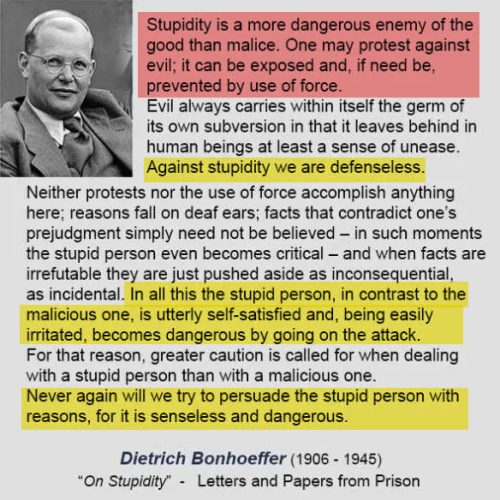
Walker’s commentary, as always, was a form of detached observation. He gives his opinions but never diagnoses unless professionally contracted. “What you’re describing is a phenomenon known as seductive epistemic oversimplification. A complex, multi-layered body of research—Hari’s work on social determinants, Maté’s on the trauma as the primary cause of ADHD—all being reduced to a few charismatic soundbites. It’s the ‘TEDification’ of psychiatry. The subject is stripped of its broad evidence bases, and presented as a singular, easily-digestible truth.”
He continued, the words clicking into place with a chilling precision. “The issue isn’t the information itself, but the way it’s consumed and applied. The charismatic speaker, the easily-shareable video—it creates an illusion of expertise without the requirement for rigorous thought. It’s emotionally resonant, but intellectually vacant. It validates a personal narrative without demanding introspection. And the appeal is obvious: it allows for the externalisation of responsibility. ‘I didn’t do my laundry because I’m lazy,’ is a difficult thought. ‘My inability to perform domestic chores is a trauma response,’ is much more palatable.”
Tarek found himself nodding into the phone, the notes from his Galaxy Z-fold suddenly making perfect, terrifying sense. Jane wasn’t a bad person; she was a symptom. An early adopter of the self-help movement’s latest, most profitable trend.
“So, she’s a personification of search engine optimisation,” Tarek mused.
“Precisely,” Walker said, a hint of dry satisfaction in his voice. “A perfect, SEO-driven narrative, optimised for emotional keywords and a frictionless user experience. It’s designed to be found, not to be fact-checked.”
Tarek laughed, a short, sharp burst of relief. “Thank you, Captain. My mind was just… circling the runway. I knew you’d have a framework for this. ”
“My pleasure, Tarek,” Walker replied. “It’s always a privilege to have new data points to consider. Even when they’re delivered in a turmeric-scented monologue.”
“I’ll send you the full notes,” Tarek said, already planning the subject line. “A debriefing report for a controlled experiment in utter nonsense.”
“Excellent. I look forward to reading it,” Walker said. “And Tarek? Try to maintain your own performance metrics in the face of such… inconsistency. It’s all part of the job.”
Tarek smiled. “Will do. And please, give my regards to your biscuit.”
“I’ll tell it you’re thinking of its structural integrity,” Walker confirmed, and the call ended with a soft click. Tarek felt a sense of relief, a little bit of order restored to his world. He could now proceed with the task of turning Jane’s chaos into a profitable, well-structured article.