





Estimated reading time at 200 wpm: 4 minutes
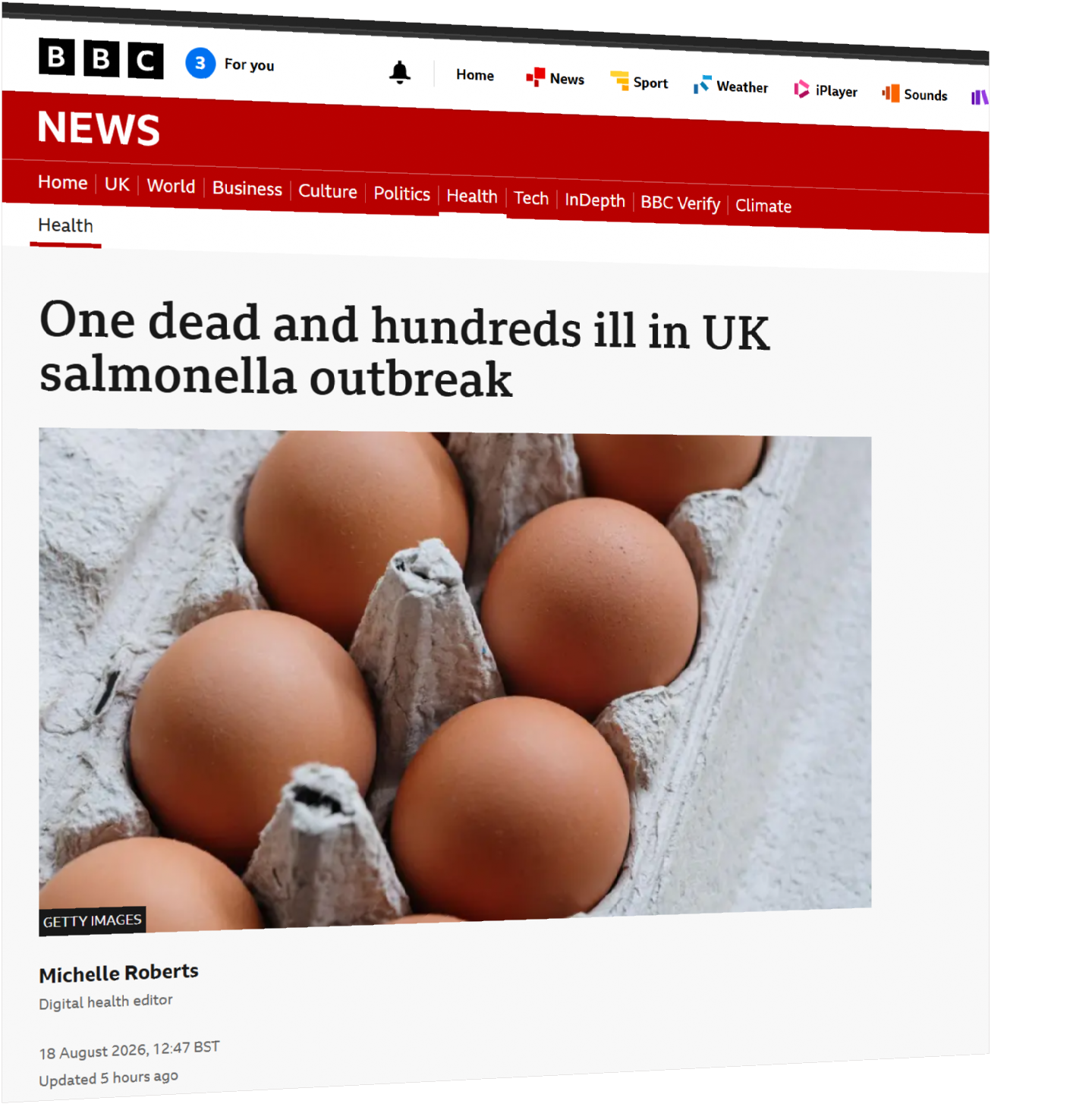
I got a WhatsApp ping from a colleague: a BBC link, a dramatic headline, and a friendly warning — “Look after yourself if you eat egg.” Then “Eggs.. we feed them to our dogs.” I did what sensible people do: skimmed, sighed, and then read the piece properly. The headline had done its job. Me? I sat there thinking about how a single paragraph order can turn a supply‑chain blip into a domestic emergency and a canine safety ‘concern’.
Whether or not you agree our Fat Disclaimer applies
Below I unpack the comedy of errors — the skim read, the emotional escalation, and the actual facts — without naming anyone (except me, because I like the sound of my own voice). This is a short field guide to panicking responsibly.

1. What the headline does so effectively
Headlines are tiny theatrical productions. “One dead and hundreds ill” is a perfectly serviceable opening act: it promises drama, stakes and a moral panic. Most readers stop there. After all people are very busy. Life’s too short. The brain rewards the emotional cue and files the rest under “urgent”.
Why it works:
- Salience over scale: a single death is more vivid than 200 cases in a population of 67 million.
- Authority shorthand: “experts say” and “investigations ongoing” are verbal smoke machines — they make everything look bigger.
- Vulnerability anchors: mention babies and 90‑year‑olds and you’ve got ‘horror’ mixed with ’empathy’ doing the heavy lifting.
Result: people forward the link with a protective note. Colleagues advise. Dogs are mentioned.
2. How the skim read turns facts into fear
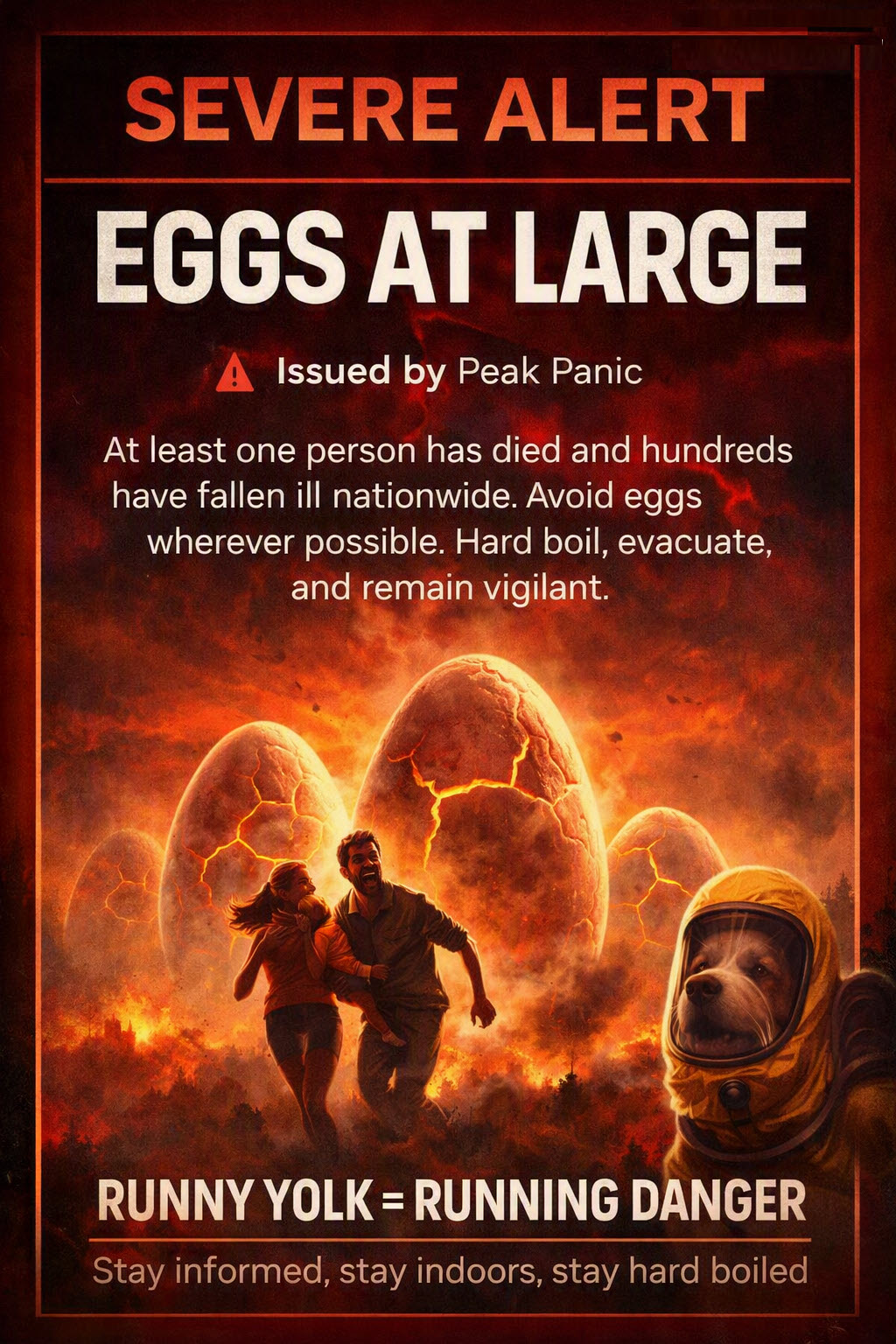
Skim reading is a survival skill in the information age. It’s also a mischief‑maker. You catch the headline, the first paragraph and maybe a quote from an expert. That’s enough to form a narrative: eggs are dangerous, restaurants are failing us, my shopping trolley is a biohazard (not that anyone actually said this).
What the skim misses:
- Context: the outbreak was linked to food made with imported eggs and mainly to people eating out.
- Reassurance: the article explicitly says there’s no identified link to UK‑produced eggs — but that line sits near the end.
- Scale: 207 confirmed cases is notable for epidemiology, not for national panic.
So the skim read substitutes a story arc for a data point. It’s efficient, and it’s wrong in a very human way.
3. The escalation: from headline to household policy
Here’s the predictable chain reaction I observed (and you probably have too):
- Headline → emotional alarm.
- Colleague forwards → social validation of the alarm.
- Advice appears → “avoid eggs” or “protect the dog”.
- Behavioural change → people avoid runny eggs when eating out; someone considers bubble‑wrapping their shopping.
This is not malicious. It’s neighbourly panic. The problem is the mismatch between the target of the risk (commercial catering using imported eggs) and the target of the action (your supermarket 12‑pack, your dog’s breakfast). The result is a lot of energy spent on the wrong thing.
4. The actual, proportionate takeaway
Here are the hard‑boiled facts – pun intended – served without melodrama:
- Source: the cluster is associated with food made using imported eggs and with eating out.
- Retail eggs: there is no identified link to UK‑produced eggs or poultry in the reporting. British Lion and Laid in Britain schemes add layers of protection for domestic supply.
- Severity: among the confirmed cases there were hospitalisations and one death — serious for those affected, but not a signal that every egg in the country is unsafe.
- Practical action: avoid undercooked or raw egg dishes when eating out if you want to be cautious; at home, cook eggs until yolks and whites are firm if you prefer to be conservative.
In short: the risk is real for a specific exposure; it is not a reason to treat your kitchen like a crime scene.
5. How to respond (without being a social pariah 🤣)
If you want to be helpful and not performative, try one of these low‑effort, non‑judgemental moves:
- Ask, don’t correct: “I don’t understand,” buys time and nudges the sender to check.
- Model calm behaviour: avoid forwarding alarmist posts; instead, forward the official guidance if you feel compelled, and you have life to spare.
- Protect the vulnerable: if someone in the household is very young, elderly, pregnant or immunocompromised, err on the side of fully cooked eggs and extra hygiene.
And if your colleague insists the dog needs PPE, smile, nod, and offer to make the dog a tiny scarf instead. It’s kinder, and less likely to start a WhatsApp crusade. 🙈😱
Final note: headlines are designed to be shared. If you want to keep your sanity (and your dog’s dignity), read past the first paragraph.